
How to Stake Ethereum with Ledger: Earn Passive Income Securely
Step-by-step instructions for staking ETH through Ledger Wallet, including validator selection, reward tracking, and security considerations for long-term holders.

Staking Ethereum through a Ledger hardware wallet represents one of the most secure approaches to earning passive income in the cryptocurrency ecosystem. By delegating your ETH to validators while maintaining full custody through your Ledger device, you participate in Ethereum’s proof-of-stake consensus mechanism and earn rewards without ever surrendering control of your private keys. This guide covers everything you need to know about staking ETH with Ledger Wallet, from understanding the fundamentals to tracking your accumulated rewards over time.
Understanding Ethereum Staking
Ethereum transitioned from proof-of-work to proof-of-stake consensus in September 2022, fundamentally changing how the network is secured and how participants can earn rewards. Validators replace miners as the entities responsible for proposing and validating new blocks, and they must lock (stake) ETH as collateral to participate. In return, validators earn rewards from transaction fees and protocol issuance, typically yielding between 3% and 5% APY depending on network conditions and the total amount of ETH staked.
Running a full validator node requires a minimum stake of 32 ETH and technical infrastructure to maintain uptime. For most holders, this threshold is prohibitively high. Pooled staking services solve this problem by aggregating smaller deposits from many users into validator nodes managed by professional operators, allowing anyone to stake any amount of ETH and earn proportional rewards.
Staking Options in Ledger Wallet
Ledger Wallet integrates multiple staking providers directly into the application, giving you choice and flexibility in how you stake your ETH. The primary options include liquid staking through Lido (receiving stETH tokens that represent your staked position and continue accruing value) and native staking through Kiln (institutional-grade validator infrastructure with direct ETH staking).
Liquid Staking with Lido
Lido is the largest liquid staking protocol on Ethereum, managing billions of dollars in staked ETH. When you stake through Lido via Ledger Wallet, you deposit ETH and receive stETH (staked ETH) tokens at a 1:1 ratio. These stETH tokens represent your staked position and automatically increase in value as staking rewards accrue. The key advantage of liquid staking is that your stETH tokens remain fully liquid — you can trade them, use them as collateral in DeFi protocols, or transfer them at any time without waiting for an unstaking period.
Lido charges a 10% fee on staking rewards (not on your principal), which covers validator operating costs and the Lido DAO treasury. The remaining 90% of rewards flow directly to stETH holders through the token’s rebasing mechanism. Current APY for Lido staking typically ranges from 3% to 4.5%, varying with network conditions.
Native Staking with Kiln
Kiln provides institutional-grade Ethereum staking infrastructure with a focus on performance and reliability. Staking through Kiln via Ledger Wallet deposits your ETH directly into Kiln-operated validator nodes. Unlike liquid staking, native staking does not issue a separate token — your staked ETH accumulates rewards that you can track in the Ledger Wallet staking dashboard.
Kiln offers competitive APY rates and enterprise-level validator uptime, making it an excellent choice for users who prefer straightforward staking without the complexity of managing liquid staking tokens across DeFi protocols.
Step-by-Step: Staking ETH with Ledger Wallet
Before staking, ensure your Ledger Wallet application is up to date and your Ethereum app is installed on your hardware device. Connect your Ledger, unlock it with your PIN, and open the Ethereum app on the device.
- Navigate to the Earn section in Ledger Wallet and select Ethereum staking. You will see available staking providers with their current APY rates, minimum deposit requirements, and fee structures.
- Select your preferred provider (Lido for liquid staking or Kiln for native staking). Review the terms, fees, and expected returns for your chosen option.
- Enter the amount of ETH you wish to stake. There is no minimum for Lido liquid staking, while Kiln may have minimum deposit requirements that vary over time.
- Review the transaction details displayed in Ledger Wallet, including the staking contract address, the amount of ETH being staked, and the estimated network gas fee for the transaction.
- Confirm on your hardware wallet. Your Ledger device will display the transaction details via Clear Signing. Verify the contract address, the amount, and the gas fee on your device screen before pressing the confirmation button.
- Wait for confirmation. The staking transaction will be broadcast to the Ethereum network and confirmed within a few minutes. Once confirmed, your staked position will appear in the Ledger Wallet staking dashboard.
Tracking Your Staking Rewards
Ledger Wallet provides a dedicated staking dashboard that displays your active staked positions, accumulated rewards, current APY, and historical earnings charts. For Lido staking, you can also see your stETH balance, which increases automatically as rewards accrue. The dashboard updates regularly to reflect the latest blockchain data.
Ethereum staking rewards are earned continuously as your staked ETH participates in network validation. The exact reward rate depends on the total amount of ETH staked across the network, the performance of the validators managing your stake, and current network conditions. Historically, Ethereum staking has provided a relatively stable yield compared to more volatile DeFi strategies.
Unstaking and Withdrawals
When you decide to unstake your ETH, the process varies depending on your staking provider. For Lido liquid staking, you can either swap your stETH back to ETH on a decentralized exchange for instant liquidity (at a slight discount or premium depending on market conditions), or use Lido’s official withdrawal queue, which processes requests at a 1:1 rate but may take several days depending on queue length.
For native staking through Kiln, unstaking initiates a withdrawal request that is processed by the Ethereum protocol. Withdrawal times vary based on the exit queue length, but typically complete within a few days to a couple of weeks. During the unstaking period, your ETH continues to earn rewards until it is fully withdrawn.
Security Considerations for Stakers
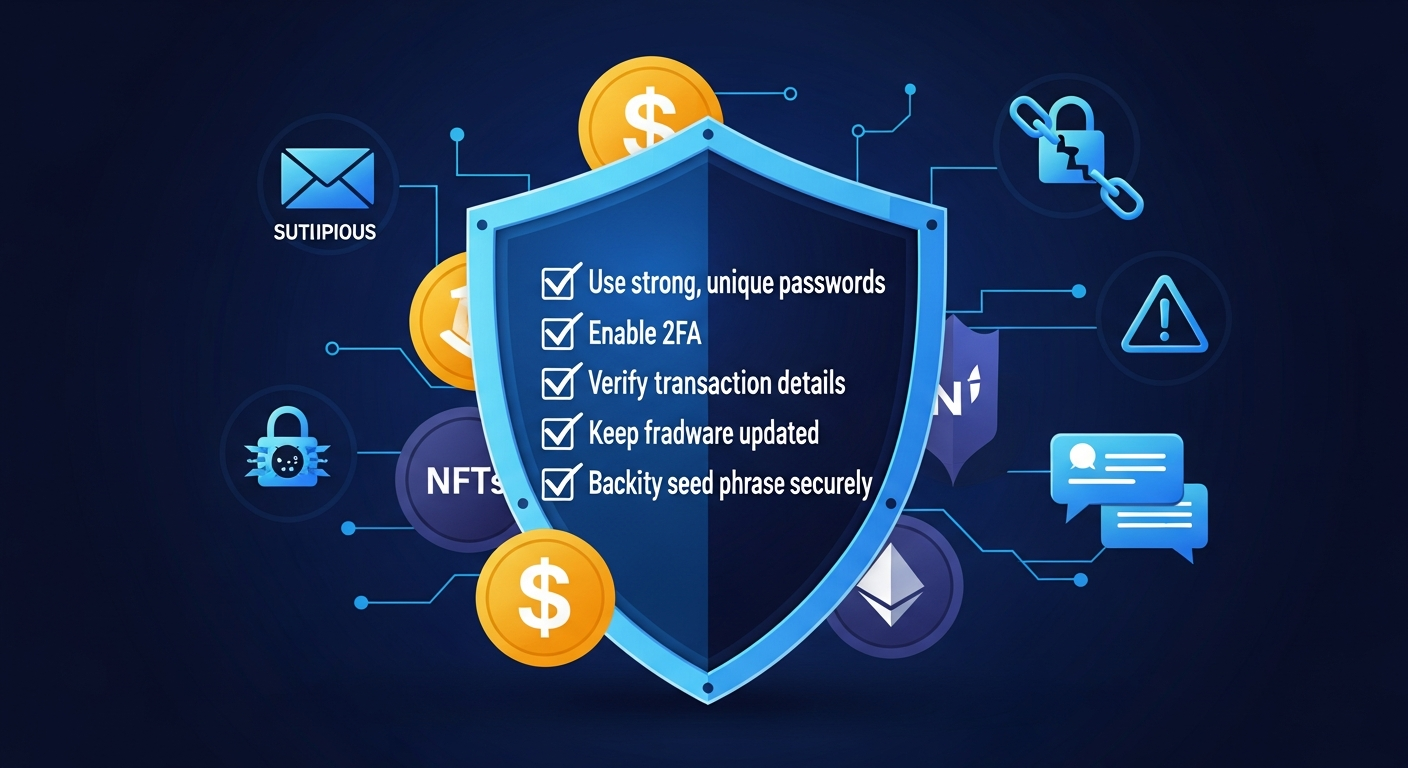
Staking through Ledger Wallet maintains the full security of hardware wallet custody. Your private keys never leave the Secure Element chip, and every staking and unstaking transaction requires physical confirmation on your device. However, there are additional security considerations specific to staking that you should understand.
- Smart contract risk: Staking protocols like Lido operate through smart contracts that could potentially contain vulnerabilities. Both Lido and Kiln have undergone extensive audits, but no smart contract is completely risk-free.
- Validator risk: If the validators managing your stake are penalized for misbehavior or extended downtime (slashing), a portion of your staked ETH could be lost. Reputable providers like Lido and Kiln mitigate this through distributed validator sets and insurance mechanisms.
- Liquidity risk: For native staking, your ETH is locked during the staking period and the withdrawal queue. Ensure you do not stake funds you might need to access urgently.
- Always verify staking transactions on your hardware wallet screen using Clear Signing before confirming. This prevents potential phishing attacks that attempt to redirect your staking deposit to malicious contracts.
Maximizing Your Staking Returns
To optimize your Ethereum staking returns with Ledger, consider these strategies: stake consistently over time rather than waiting for optimal conditions, as timing the market is rarely effective for staking yields; reinvest rewards periodically by staking accumulated stETH or additional ETH to compound your returns; and if using liquid staking, explore DeFi opportunities where stETH can earn additional yield as collateral in lending protocols, though this introduces additional smart contract risk that should be carefully evaluated.
Ethereum staking through Ledger Wallet provides a powerful combination of passive income generation and hardware-grade security. By maintaining self-custody throughout the staking process, you earn rewards on your terms without trusting centralized intermediaries with your assets.
Comments
No comments yet. Be the first to share your thoughts!