
Ledger Security Best Practices: Protecting Your Crypto Assets
Essential security strategies for Ledger hardware wallet users, covering recovery phrase management, firmware updates, phishing prevention, and Clear Signing verification.
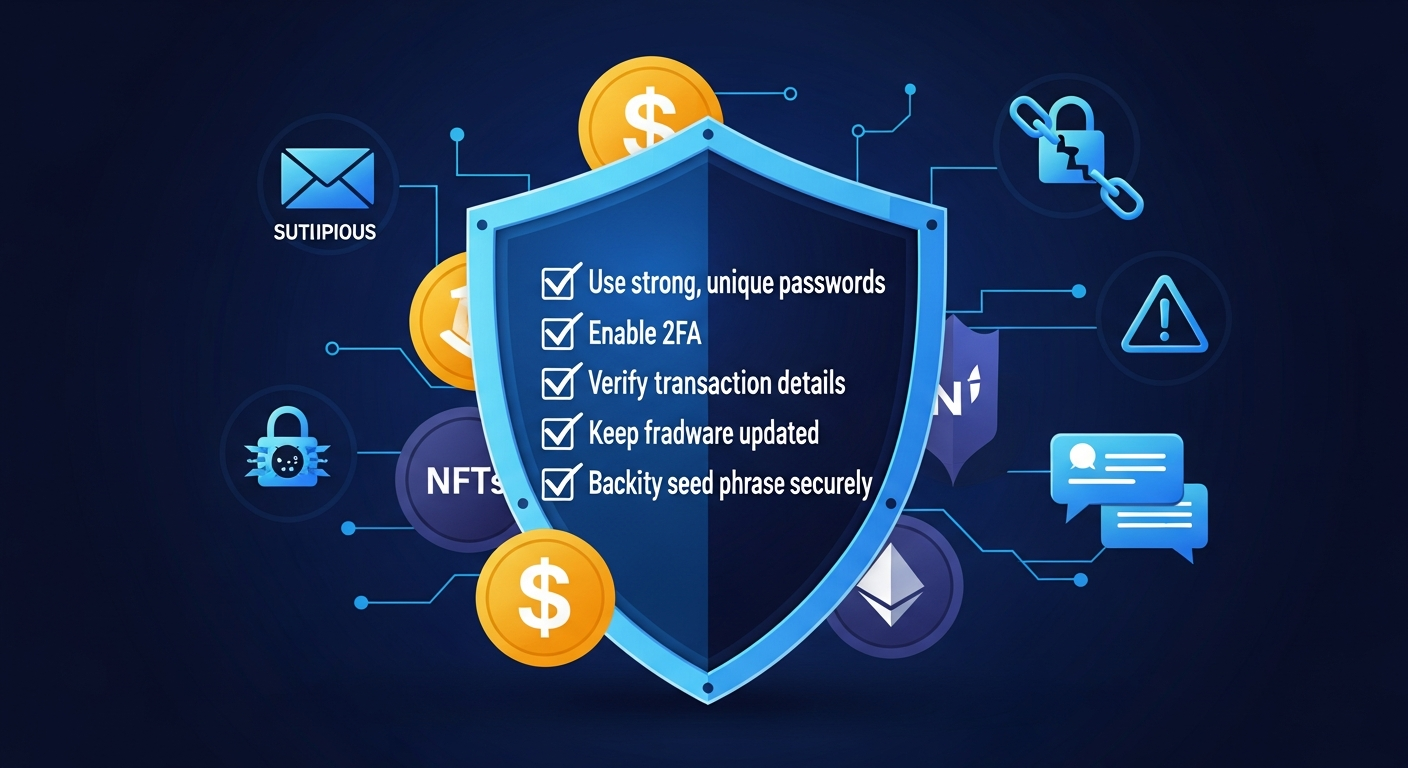
Hardware wallet security is only as strong as the practices surrounding it. While Ledger devices provide industry-leading protection through certified Secure Element chips and advanced features like Clear Signing and Transaction Check, the overall security of your cryptocurrency depends equally on how you manage your recovery phrase, interact with the digital ecosystem, and respond to potential threats. This guide covers essential security best practices that every Ledger user should follow to maximize the protection of their digital assets.
Recovery Phrase Management
Your 24-word recovery phrase is the single most critical piece of information in your cryptocurrency security model. It is the master key from which all your private keys are derived, and anyone who possesses these 24 words in the correct order has complete, irrevocable access to every account associated with your Ledger device. Protecting your recovery phrase is not optional — it is the foundation upon which every other security measure rests.
Storage Best Practices
Write your recovery phrase on the card included with your Ledger device or, preferably, on a metal backup plate that resists fire, water, and physical degradation. Paper can be destroyed by water damage, fire, or simply aging over time, while metal plates (available from companies like Cryptosteel, Billfodl, and others) provide durable, long-term storage that can withstand extreme conditions.
Store your backup in a secure physical location such as a home safe, bank safety deposit box, or other secured storage that only you (and perhaps a trusted family member or executor) can access. Consider creating two physical copies stored in geographically separate locations to protect against localized disasters like floods or fires that could destroy a single backup.
What Never to Do with Your Recovery Phrase
- Never photograph or screenshot your recovery phrase
- Never store it in a notes app, cloud storage, email, or any digital format
- Never type it into any website, form, or application (except your Ledger device during recovery)
- Never share it with anyone, including Ledger customer support
- Never speak it aloud in the presence of voice-activated devices
- Never store it alongside your Ledger device (if both are stolen, the thief has everything)
Clear Signing: Your First Line of Defense
Ledger’s Clear Signing technology transforms how you verify transactions by displaying human-readable details on your hardware wallet’s trusted screen. Every time you approve a transaction, take the time to carefully read every detail shown on your device: the recipient address (compare it character by character with your intended destination), the exact amount being sent, the network fee, and for smart contract interactions, the specific action being authorized.
Blind signing — approving transactions without understanding what they do — is one of the most common ways users lose funds. Malicious dApps and phishing sites craft transactions that appear legitimate in the software interface but actually authorize unlimited token approvals, drain wallets, or transfer assets to attacker-controlled addresses. Clear Signing renders these attacks visible by showing the true transaction intent on your trusted device screen.
If the details on your hardware wallet screen do not match what you expected to see in Ledger Wallet, reject the transaction immediately. Discrepancies between the software display and the hardware display are a strong indicator that your computer may be compromised or that you are interacting with a malicious application.
Transaction Check: ML-Powered Protection
Transaction Check provides an additional security layer by analyzing every transaction against known threat databases and behavioral patterns using machine learning algorithms. Before a transaction reaches your hardware wallet for signing, Transaction Check evaluates the recipient address, smart contract code, and transaction context to provide a risk assessment.
Pay close attention to Transaction Check warnings. A green indicator means the transaction has been verified against known safe patterns. Yellow indicates the transaction requires additional review — examine the details carefully and proceed only if you are confident in the transaction’s legitimacy. Red signals a high-risk transaction that matches known scam patterns — exercise extreme caution and verify independently before proceeding.
Firmware and Application Updates
Keep your Ledger device firmware and the Ledger Wallet application up to date at all times. Firmware updates patch security vulnerabilities, improve device performance, and add support for new blockchain networks and features. Ledger Wallet will notify you when updates are available, and the update process can be completed directly through the application.
Before updating firmware, verify that you have your recovery phrase backup accessible (in case the device resets during the update, which is rare but possible). The firmware update process typically takes 5–10 minutes and requires a USB connection to your computer. After updating, verify that your accounts and balances are displayed correctly in Ledger Wallet.
Phishing and Social Engineering Defense
Phishing attacks targeting cryptocurrency users are sophisticated and persistent. Common attack vectors include fake Ledger support emails, counterfeit Ledger Wallet download pages, fraudulent browser extensions, and social media impersonation. Understanding these threats and knowing how to identify them is essential for maintaining security.
Recognizing Phishing Attempts
- Fake emails: Ledger will never ask for your recovery phrase via email. Any email requesting your 24 words is a scam, regardless of how official it appears.
- Counterfeit websites: Always verify you are on the legitimate Ledger website (ledger.com) before downloading software. Check the URL carefully for subtle misspellings or extra characters.
- Fake support: Ledger support agents will never ask for your recovery phrase, PIN code, or remote access to your computer. Contact support only through official channels on the Ledger website.
- Address poisoning: Scammers send tiny transactions from addresses that visually resemble your own, hoping you will copy the scam address from your transaction history when sending funds. Always use the “Receive” function to get fresh addresses verified on your device.
- Malicious dApps: Before connecting your Ledger to any dApp, verify its legitimacy through official channels. Use bookmarks for frequently visited DeFi protocols rather than clicking links from search results or social media.
Physical Security Measures
Your Ledger hardware wallet should be treated as a valuable physical asset. Store it in a secure location when not in use, and never leave it unattended in public places. While the PIN code protects against unauthorized access (the device wipes after three incorrect attempts), physical security adds an important additional layer of protection.
If you travel with your Ledger device, keep it on your person rather than in checked luggage. Consider using a tamper-evident case or bag that would reveal if someone has accessed your device while it was out of your sight. For high-value portfolios, some users maintain separate devices for daily transactions and long-term cold storage, minimizing the frequency with which their primary storage device is connected to any computer.
Regular Security Audits
Periodically review your security setup to identify and address potential weaknesses. Verify that your recovery phrase backup is intact, readable, and stored securely. Check that your Ledger device is running the latest firmware. Review your account transaction history for any unauthorized activity. Verify that you have not granted unlimited token approvals to any smart contracts (use tools like revoke.cash to audit and revoke unnecessary approvals).
Consider establishing a regular security review schedule — monthly or quarterly — where you systematically verify each element of your security setup. Documenting your review process ensures that nothing is overlooked and creates a record of your security posture over time.
Emergency Preparedness
Have a plan for what to do if your Ledger device is lost, stolen, or damaged. The recovery process involves purchasing a new Ledger device, restoring it using your 24-word recovery phrase, and verifying that all accounts and balances are correctly restored. If you suspect your current device has been compromised, set up a new device with a new recovery phrase and transfer your assets to the new accounts immediately.
Consider designating a trusted person who knows the location of your recovery phrase backup and understands the basic recovery process, in case you are unable to access your assets due to incapacitation. This estate planning consideration is often overlooked but is essential for protecting your assets and ensuring they can be recovered by your family if needed.
Comments
No comments yet. Be the first to share your thoughts!