Search on Youtube!

Ledger Live is

Ledger Wallet (formerly Ledger Live) is a comprehensive cryptocurrency management application that pairs with Ledger hardware wallets to provide secure portfolio tracking, staking, swapping, and DeFi access across 5,500+ digital assets.

Ledger Live is a powerful companion application designed to give users full control over their digital experience. Ledger Live allows you to securely manage your activities while keeping your data protected. By combining usability with security, Ledger Live serves as a central hub for all activities.

How Ledger Live Works

Ledger Live connects directly to your account, ensuring that sensitive data never leaves the device. All actions must be confirmed, protecting users from unauthorized access. Ledger Live acts as an interface, while security remains enforced at every level.

Key Features of Ledger Live

Decentralized finance has made token swapping accessible to anyone with a cryptocurrency wallet, but navigating the complex landscape of swap providers, exchange rates, network fees, and security considerations can be overwhelming. Ledger Wallet simplifies this process by integrating multiple swap providers into a single interface, allowing you to compare rates, execute swaps with hardware wallet security, and manage your diversified portfolio without ever exposing your private keys to third-party platforms. This guide explores how to use Ledger’s swap functionality effectively, compare providers intelligently, and minimize costs on every trade.

Asset Management in Ledger Live

Understanding Crypto Swaps A cryptocurrency swap is the exchange of one digital asset for another without going through a traditional centralized exchange. Instead of depositing funds to an exchange, placing orders, and withdrawing, swaps execute through smart contracts or third-party services that handle the conversion directly between your wallets. This approach offers several advantages: no account creation required, no custody risk from holding funds on an exchange, faster execution for simple conversions, and the ability to access tokens that may not be listed on centralized platforms.

Security at the Core

Ledger Wallet integrates both centralized swap services (like Changelly, which matches orders through its own liquidity pools) and decentralized exchange aggregators (like 1inch and Paraswap, which route your trade through multiple DEX liquidity pools to find the best rate). The combination of these provider types gives you access to deep liquidity and competitive pricing across hundreds of token pairs. Accessing Swaps in Ledger Wallet To access the swap feature, open Ledger Wallet with your hardware device connected and navigate to the “Swap” section from the main menu.

Ledger Live and Self-Custody

Select the token you want to exchange (the “from” asset) from your available accounts, choose the token you want to receive (the “to” asset), and enter the amount you wish to swap. Ledger Wallet will simultaneously query all integrated providers and display quotes from each one within seconds. The quote comparison screen shows the exchange rate offered by each provider, the estimated amount of the target token you will receive, the provider’s fee, the estimated network (gas) fee, and the total cost of the swap.

Buying, Selling, and Swapping

This side-by-side presentation makes it easy to identify which provider offers the best value for your specific trade, as the optimal choice varies depending on the token pair, trade size, and current market conditions. Comparing Swap Providers Understanding the differences between swap providers helps you make better choices consistently. Each provider has distinct characteristics that make them more or less suitable for different types of trades.

Swaps in Ledger Live

Changelly Changelly is a centralized swap service that has been operating since 2015, supporting over 500 cryptocurrencies across multiple blockchain networks. Changelly handles cross-chain swaps natively, making it ideal for exchanging assets between different blockchains (such as swapping Bitcoin for Ethereum or Solana tokens). Changelly’s fees are typically fixed and transparent, with a standard swap fee of approximately 0.25% plus network transaction fees.

Staking with Ledger Live

The service is particularly strong for large-cap token pairs and cross-chain conversions where DEX liquidity may be limited. 1inch 1inch is a decentralized exchange aggregator that splits your trade across multiple DEX liquidity pools to find the optimal execution path. When you swap through 1inch, your trade may be routed through Uniswap, SushiSwap, Curve, Balancer, and other DEXes simultaneously to minimize slippage and maximize the amount of tokens you receive.

Supported Staking Assets

1inch excels at on-chain swaps within the same network (especially Ethereum and EVM-compatible chains) and typically offers the best rates for medium to large trades where splitting across multiple liquidity sources provides meaningful improvement. Paraswap Paraswap is another DEX aggregator that optimizes swap routes across decentralized exchanges on Ethereum, Polygon, BSC, Avalanche, Arbitrum, Optimism, and other networks. Paraswap’s routing algorithm considers gas costs alongside exchange rates, which can result in better total value for smaller trades where gas optimization significantly impacts the final amount received.

Ledger Live and DeFi Access

Paraswap also offers limit order functionality for users who want to set target prices rather than executing at current market rates. Optimizing Your Swap Costs Several strategies can help you reduce costs and get better value from every swap executed through Ledger Wallet. Timing and Gas Fees On Ethereum and other EVM chains, network gas fees fluctuate significantly based on network congestion.

WalletConnect and DApp Integration

Swapping during periods of lower activity (typically weekends, early morning hours UTC) can reduce gas costs by 50% or more compared to peak congestion periods. Ledger Wallet displays the current gas estimate for each swap, allowing you to evaluate whether the network fee is acceptable before proceeding. Trade Size Considerations For very small swaps, network gas fees can represent a disproportionate percentage of the total transaction value, making the swap uneconomical.

Ledger Live Mobile and Desktop

Consider batching multiple small swaps into a single larger transaction when possible. Conversely, for very large swaps, splitting the trade across multiple transactions can sometimes result in better overall pricing by reducing slippage impact on each individual execution. Layer 2 Alternatives If you are swapping ERC-20 tokens and gas fees on Ethereum mainnet are prohibitive, consider whether the same tokens are available on Layer 2 networks like Arbitrum, Optimism, or Polygon, where gas fees are dramatically lower (often under $0.10 per transaction).

User Experience and Interface

Ledger Wallet supports swaps on multiple networks, so you can move assets to an L2 and execute swaps there for a fraction of the mainnet cost. Security During Swaps Every swap executed through Ledger Wallet benefits from the full security stack of your hardware device. When you select a swap quote and proceed, the transaction is constructed and sent to your Ledger device for signing.

Privacy and Compliance

Clear Signing displays the exact details of the swap transaction on your device screen: the token being sent, the amount, the smart contract or service address receiving your tokens, and the expected return. This hardware verification is particularly important for swaps because the transaction involves sending your tokens to a smart contract or service address and trusting that it will return the expected tokens. By verifying the contract address on your trusted device screen, you protect against phishing attacks where malicious websites present fake swap interfaces that actually direct your tokens to attacker-controlled addresses.

Ledger Live and Transparency

Swap Security Checklist Verify the swap contract address on your hardware wallet screen matches the expected provider contract Check that the token amount being sent matches what you entered in the swap interface Review the Transaction Check risk assessment before confirming on your device Be cautious of unusually favorable exchange rates, as they may indicate a scam or front-running attack Confirm the received token appears in your Ledger Wallet account after the swap completes Advanced Swap Strategies For users looking to optimize their swap experience beyond basic token exchanges, Ledger Wallet’s DeFi dApp browser opens up additional possibilities. By connecting to DEX interfaces directly through the dApp browser, you can access advanced order types such as limit orders (execute only at a specified price), range orders (provide liquidity within a price range), and multi-hop routes (swap through intermediate tokens for better pricing on illiquid pairs). Dollar-cost averaging (DCA) into positions through regular swaps is another strategy well-suited to Ledger Wallet’s security model.

Future of Ledger Live

Rather than making a single large swap, schedule periodic smaller swaps over days or weeks to average out price volatility. While Ledger Wallet does not currently automate DCA scheduling, the process of executing individual swaps is straightforward and each transaction benefits from full hardware wallet security. Monitoring swap rates across providers over time can reveal patterns in when certain providers offer better rates for specific token pairs.

Ledger Live in the Web3 Ecosystem

Bookmarking particularly good rate windows and executing larger swaps during favorable conditions can accumulate meaningful savings over many trades, especially for active portfolio managers who swap frequently as part of their investment strategy.

Using Ledger for DeFi Swaps: Compare Providers and Save

How to use Ledger Wallet's integrated swap aggregator to compare rates across multiple DeFi providers, execute secure swaps, and minimize fees on every trade.
Decentralized finance has made token swapping accessible to anyone with a cryptocurrency wallet, but navigating the complex landscape of swap providers, exchange rates, network fees, and security considerations can be overwhelming. Ledger Wallet simplifies this process by integrating multiple swap providers into a single interface, allowing you to compare rates, execute swaps with hardware wallet security, and manage your diversified portfolio without ever exposing your private keys to third-party platforms. This guide explores how to use Ledger’s swap functionality effectively, compare providers intelligently, and minimize costs on every trade.

Understanding Crypto Swaps

A cryptocurrency swap is the exchange of one digital asset for another without going through a traditional centralized exchange. Instead of depositing funds to an exchange, placing orders, and withdrawing, swaps execute through smart contracts or third-party services that handle the conversion directly between your wallets. This approach offers several advantages: no account creation required, no custody risk from holding funds on an exchange, faster execution for simple conversions, and the ability to access tokens that may not be listed on centralized platforms.

Ledger Wallet integrates both centralized swap services (like Changelly, which matches orders through its own liquidity pools) and decentralized exchange aggregators (like 1inch and Paraswap, which route your trade through multiple DEX liquidity pools to find the best rate). The combination of these provider types gives you access to deep liquidity and competitive pricing across hundreds of token pairs.

Accessing Swaps in Ledger Wallet

To access the swap feature, open Ledger Wallet with your hardware device connected and navigate to the “Swap” section from the main menu. Select the token you want to exchange (the “from” asset) from your available accounts, choose the token you want to receive (the “to” asset), and enter the amount you wish to swap. Ledger Wallet will simultaneously query all integrated providers and display quotes from each one within seconds.

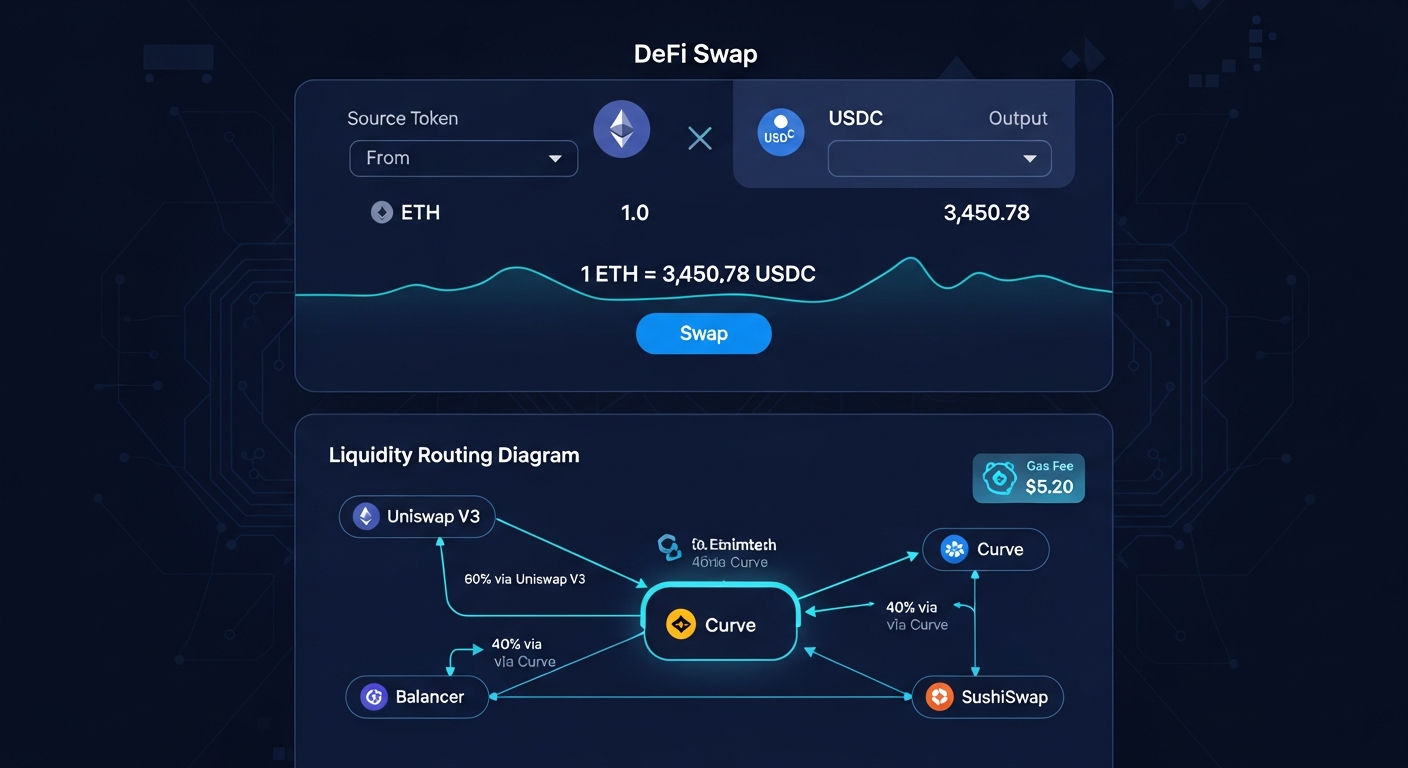
The quote comparison screen shows the exchange rate offered by each provider, the estimated amount of the target token you will receive, the provider’s fee, the estimated network (gas) fee, and the total cost of the swap. This side-by-side presentation makes it easy to identify which provider offers the best value for your specific trade, as the optimal choice varies depending on the token pair, trade size, and current market conditions.

Comparing Swap Providers

Understanding the differences between swap providers helps you make better choices consistently. Each provider has distinct characteristics that make them more or less suitable for different types of trades.

Changelly

Changelly is a centralized swap service that has been operating since 2015, supporting over 500 cryptocurrencies across multiple blockchain networks. Changelly handles cross-chain swaps natively, making it ideal for exchanging assets between different blockchains (such as swapping Bitcoin for Ethereum or Solana tokens). Changelly’s fees are typically fixed and transparent, with a standard swap fee of approximately 0.25% plus network transaction fees. The service is particularly strong for large-cap token pairs and cross-chain conversions where DEX liquidity may be limited.

1inch

1inch is a decentralized exchange aggregator that splits your trade across multiple DEX liquidity pools to find the optimal execution path. When you swap through 1inch, your trade may be routed through Uniswap, SushiSwap, Curve, Balancer, and other DEXes simultaneously to minimize slippage and maximize the amount of tokens you receive. 1inch excels at on-chain swaps within the same network (especially Ethereum and EVM-compatible chains) and typically offers the best rates for medium to large trades where splitting across multiple liquidity sources provides meaningful improvement.

Paraswap

Paraswap is another DEX aggregator that optimizes swap routes across decentralized exchanges on Ethereum, Polygon, BSC, Avalanche, Arbitrum, Optimism, and other networks. Paraswap’s routing algorithm considers gas costs alongside exchange rates, which can result in better total value for smaller trades where gas optimization significantly impacts the final amount received. Paraswap also offers limit order functionality for users who want to set target prices rather than executing at current market rates.

Optimizing Your Swap Costs

Several strategies can help you reduce costs and get better value from every swap executed through Ledger Wallet.

Timing and Gas Fees

On Ethereum and other EVM chains, network gas fees fluctuate significantly based on network congestion. Swapping during periods of lower activity (typically weekends, early morning hours UTC) can reduce gas costs by 50% or more compared to peak congestion periods. Ledger Wallet displays the current gas estimate for each swap, allowing you to evaluate whether the network fee is acceptable before proceeding.

Trade Size Considerations

For very small swaps, network gas fees can represent a disproportionate percentage of the total transaction value, making the swap uneconomical. Consider batching multiple small swaps into a single larger transaction when possible. Conversely, for very large swaps, splitting the trade across multiple transactions can sometimes result in better overall pricing by reducing slippage impact on each individual execution.

Layer 2 Alternatives

If you are swapping ERC-20 tokens and gas fees on Ethereum mainnet are prohibitive, consider whether the same tokens are available on Layer 2 networks like Arbitrum, Optimism, or Polygon, where gas fees are dramatically lower (often under $0.10 per transaction). Ledger Wallet supports swaps on multiple networks, so you can move assets to an L2 and execute swaps there for a fraction of the mainnet cost.

Security During Swaps

Every swap executed through Ledger Wallet benefits from the full security stack of your hardware device. When you select a swap quote and proceed, the transaction is constructed and sent to your Ledger device for signing. Clear Signing displays the exact details of the swap transaction on your device screen: the token being sent, the amount, the smart contract or service address receiving your tokens, and the expected return.

This hardware verification is particularly important for swaps because the transaction involves sending your tokens to a smart contract or service address and trusting that it will return the expected tokens. By verifying the contract address on your trusted device screen, you protect against phishing attacks where malicious websites present fake swap interfaces that actually direct your tokens to attacker-controlled addresses.

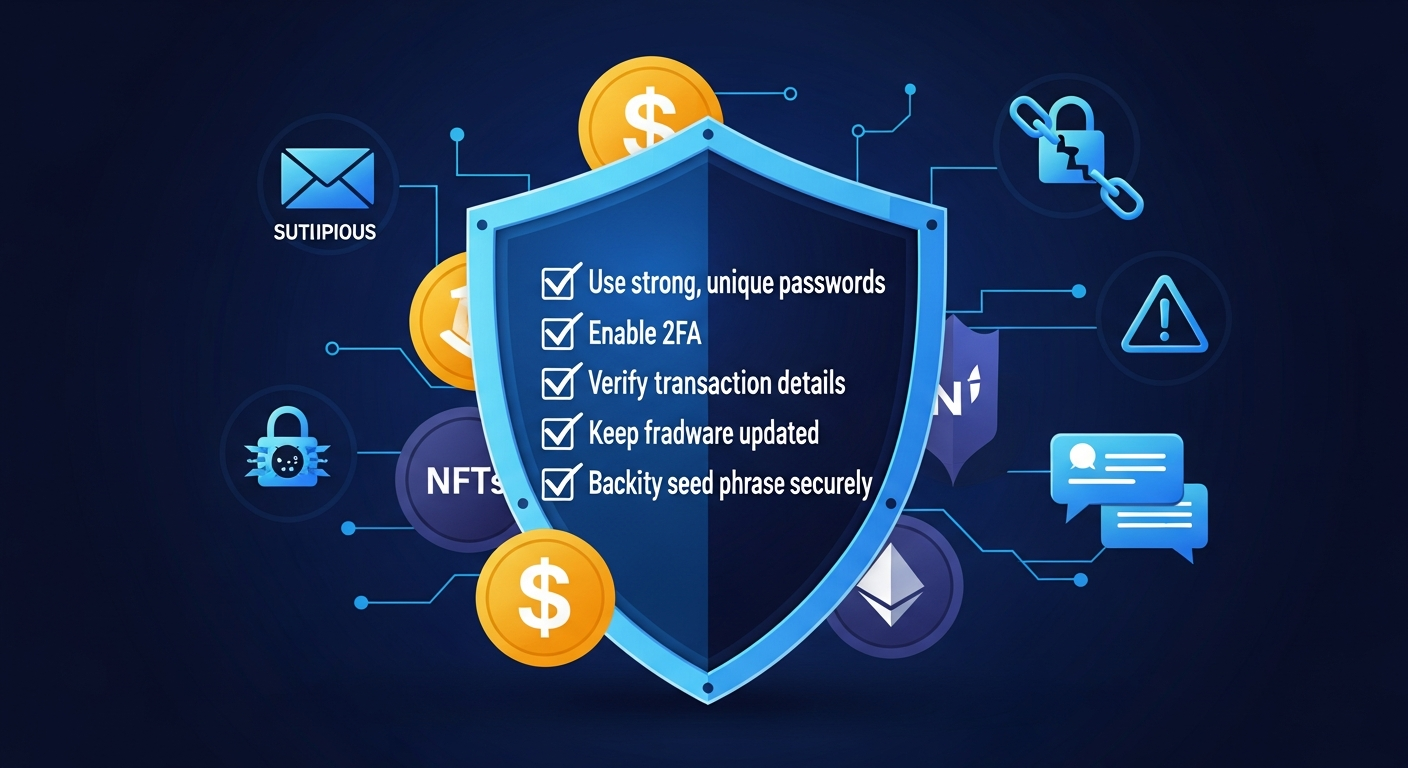
Swap Security Checklist

  • Verify the swap contract address on your hardware wallet screen matches the expected provider contract
  • Check that the token amount being sent matches what you entered in the swap interface
  • Review the Transaction Check risk assessment before confirming on your device
  • Be cautious of unusually favorable exchange rates, as they may indicate a scam or front-running attack
  • Confirm the received token appears in your Ledger Wallet account after the swap completes

Advanced Swap Strategies

For users looking to optimize their swap experience beyond basic token exchanges, Ledger Wallet’s DeFi dApp browser opens up additional possibilities. By connecting to DEX interfaces directly through the dApp browser, you can access advanced order types such as limit orders (execute only at a specified price), range orders (provide liquidity within a price range), and multi-hop routes (swap through intermediate tokens for better pricing on illiquid pairs).

Dollar-cost averaging (DCA) into positions through regular swaps is another strategy well-suited to Ledger Wallet’s security model. Rather than making a single large swap, schedule periodic smaller swaps over days or weeks to average out price volatility. While Ledger Wallet does not currently automate DCA scheduling, the process of executing individual swaps is straightforward and each transaction benefits from full hardware wallet security.

Monitoring swap rates across providers over time can reveal patterns in when certain providers offer better rates for specific token pairs. Bookmarking particularly good rate windows and executing larger swaps during favorable conditions can accumulate meaningful savings over many trades, especially for active portfolio managers who swap frequently as part of their investment strategy.
Comments

Leave a Comment

Your comment will appear after moderation.

No comments yet. Be the first to share your thoughts!